
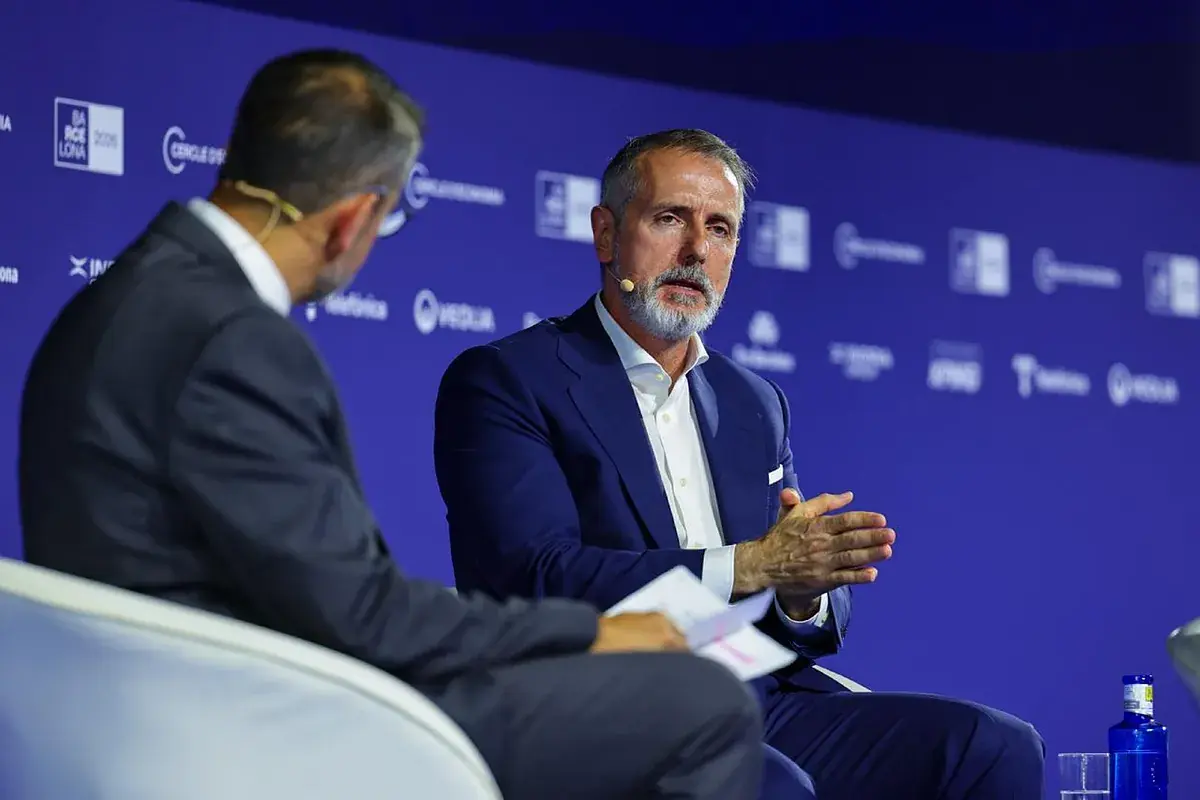
Barcelona has once again been the center of attention for the Cercle d'Economia meeting, a forum where a crucial topic was discussed: the digital future of the continent. This meeting featured in-depth discussions on how Europe can take action to avoid falling behind in a technological race that is advancing at breakneck speed, especially in areas such as artificial intelligence and quantum computing . This is not just a matter of businesses and profits, but an issue that affects the very essence of our capacity for decision-making as a society.

During these sessions, Telefónica's president, Marc Murtra, staunchly defended the idea that the region needs to become more proactive in developing its own capabilities. His main argument is that, while it's impossible to live in complete isolation, achieving solid strategic autonomy is vital to reducing dependence on third parties in critical sectors. To achieve this, the path lies in leveraging the talent we already have at home and coordinating efforts so that the innovations emerging from our laboratories have a real impact on the global market.
The chasm of scale compared to global giants
One of the most contentious issues is the stark size difference between European companies and the giants across the Atlantic. A few years ago, the valuation of the five largest US tech companies was eight times greater than that of the telecom sector in Europe; today, that figure has skyrocketed to 68 times higher. This situation makes it clear that Europe urgently needs to gain scale if it wants to have any real impact on the international stage, since without critical mass it is almost impossible to recoup the massive investments required for new infrastructure.

In this regard, it has been noted that telecommunications is the only asset in the region that can still boast a scale significant enough to compete globally. Networks and digital systems are not just cables and antennas; they act as the backbone supporting the entire artificial intelligence ecosystem. Therefore, strengthening operators like Telefónica as a leader in defense becomes an essential step to drive innovation and ensure that citizens and businesses have first-rate access to the digital tools of tomorrow.
Regulation, risk, and the right to make mistakes
For the ecosystem to flourish, good ideas aren't enough; you need an environment that doesn't clip your wings at the first sign of trouble. There's been a lot of emphasis on the need to simplify bureaucracy, something that sometimes seems like a dead end in EU institutions. Simplifying doesn't mean throwing the rules out the window, but rather prioritizing regulations that boost competitiveness and allow companies to move more nimbly. If we want to be among the top players in technology, we have to allow industry stakeholders to take risks without the fear of failure being an insurmountable burden.

Public-private collaboration has also emerged as a fundamental ingredient for success. The entire burden cannot be placed on one side; governments and businesses must work together to orchestrate both technological supply and demand. In this context, joint risk-taking will allow large-scale, continent-wide projects to come to fruition and not be shelved due to a lack of support or excessive legislative caution.
Democratic values and technical leadership
We cannot forget that technology has a profound political and social dimension. The control of large language models (LLMs) is a textbook example: of the fifty most powerful in the world, barely one is European, while the rest are divided between the United States and China. This gap is worrying because building our own technology protects our values , ensuring that AI development respects principles such as human dignity and freedom of expression—something that is not always guaranteed when we depend on models designed according to other sensibilities.
Ultimately, the old continent has all the ingredients to make a splash: we have the engineers, the institutions, and the necessary economic muscle. The challenge lies in combining these elements with a long-term vision that doesn't mince words when it comes to defending regional interests. Investing in technological sovereignty is, ultimately, about preserving the European way of life in an increasingly volatile world dependent on algorithms and data sovereignty.

Looking ahead, it is clear that the success of this transformation will depend on how quickly we can implement these structural changes. Europe has a solid foundation of digital infrastructure and next-generation projects already underway, but it is crucial that investment and talent are channeled in a way that generates a real return on investment for productivity and resilience across the region. Technological sovereignty is not a goal to be achieved overnight, but rather a continuous process of adaptation and industrial boldness that will determine our weight on the geopolitical map in the coming decades.
Table of Contents