

U.S. Customs and Border Protection, along with federal agents in Portland, have uncovered a near-perfect fraud ring that had deceived even Apple. The perpetrators are two Oregon students of Chinese origin who were importing counterfeit iPhones from China to use as defective phones sent to Apple's service department. And yes, the scheme worked, and Apple replaced them with new iPhones.
How to trade a fake iPhone for a new one without getting caught by the police
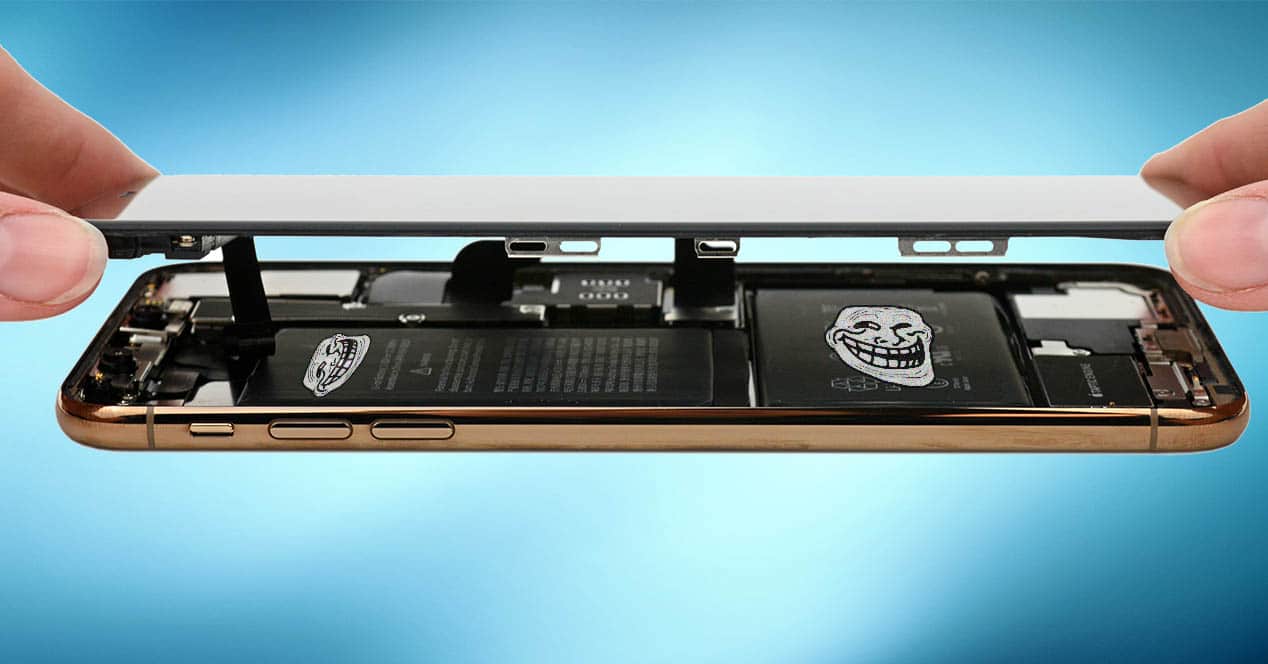
The title sounds like a joke, but that's exactly what the protagonists of this story, Yangyang Zhou and Quan Jiang, two young men with valid student visas and clean records, were doing. Their modus operandi was quite simple:
- They received dozens of counterfeit iPhones every week. A family member or contact in China was responsible for shipping the units to a provided address in Oregon.
- Once received, they proceeded to process Apple warranty support claiming that the phone did not turn on. Obviously they processed the phones one by one.
- Apple reviewed the terminal and decided replace it with a fully functional unit. As we will see later, not all units were cast, and some were returned after not being accepted.
- With the new phone in their possession, the scammers shipped the new units to China, where would be sold at a very attractive price.
- The revenue generated from these sales they would be transferred from China to an account the students held in the United States.
the alarms go off
It all begins in April 2017 at the customs department, where federal agents become suspicious of highly suspicious shipments of Apple-like mobile phones that appeared to be counterfeit in Hong Kong. The investigation begins and the agents begin to pull the rope, until in December they manage to reach Jiang, whom they interview at Terminal 6 of the Port of Portland.
It is there that Jiang confesses he usually receives between 20 and 30 phones from an acquaintance in China. This person sends them to him so Jiang can process the warranty with Apple, and once they are repaired, he sends them back to China. For this service, he receives a sum of money, a payment that his mother collects in China and transfers to a bank account he has in the United States.
The person being questioned eventually confessed that in 2017 he sent 2.000 phones to Apple , and that he either delivered them in person at an official store, or used Apple's online support service to process the warranty.
A fraud valued at $895.800
The investigations delve deeper, and agents discover that no fewer than 3.069 claims were made in Jiang's name, using names, emails, postal addresses, and IP addresses linked to him. An incredible number, yet "only" 1.493 claims successfully deceived Apple. But the question remains: how?
How is it possible that Apple did not discover that they were counterfeit units?
According to the researchers themselves, Apple technicians could not examine or repair many of the units because they could not turn on, however, we are sure that the company must have some protocol that avoids this type of case. Serial numbers, checking internal components... If a technician receives a phone that doesn't turn on, does he really change it immediately for another? That is certainly what seems to have happened in this case.
As for the protagonists of the case, they assure that they did not know that they were counterfeit units, since they were simply in charge of processing the guarantees of the telephones as they arrived. Most likely, their student visas will be withdrawn, although their lawyers assure that they acted in good faith, providing a completely legal service when processing the guarantees. The issue is more complicated in Jiang's case, as he is involved in trafficking fake phones and a wire fraud scheme.
Table of Contents