

Wireless charging has never been one of those essential features that every device absolutely must have, but it's true that when you don't have it, you miss the convenience it offers. Well, something similar happens with reverse wireless charging. The moment you start to see the advantages it offers for yourself, you wonder why not all high-end devices, and even some that aren't, offer it yet.
Reverse wireless charging, what is it?
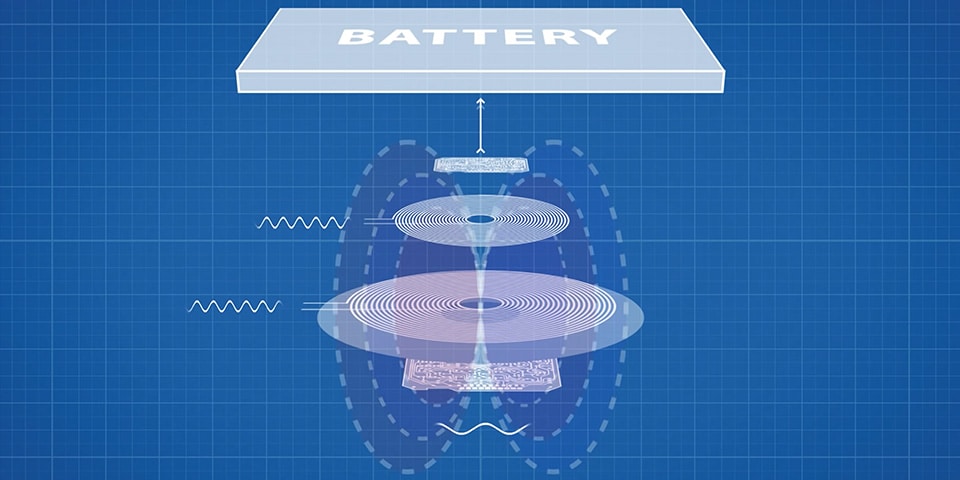
In recent years we have seen how wireless charging systems have become more and more popular. The price of chargers has been greatly reduced and you can find bases compatible with the Qi standard for just 5 euros, such as IKEA wireless chargers. But not only that, they have also improved a lot in terms of performance.
Manufacturers such as Xiaomi, Oppo or OnePlus have been making constant improvements in fast charging and wireless fast charging technology. Thus, right now models such as the OnePlus 9 Pro, Xiaomi Mi 11 Ultra, Oppor Find X3 and others are capable of charging wirelessly much faster than other high-end terminals such as the iPhone are capable of doing by cable.
Well, if all this is surprising and something that we can all take advantage of in our day to day, there is another feature that many of these phones offer and that continues to go unnoticed even by their own owners and is something that should not happen. We are referring to reverse wireless charging, a feature that is not something to use every time, but that it can get you out of trouble at certain times.
Of course, before we get to some examples, what exactly is reverse wireless charging? As you might guess, it's simply allowing a mobile device to act as a wireless charging pad. This means you can place another wirelessly compatible device on it and it will charge.
Advantages and disadvantages of reverse charging

Taking into account the number of devices that can be charged wirelessly, it is easy to imagine situations where having it would be an important advantage. Although not everything is always wonderful and there are disadvantages that can arise, although they are so obvious and easy to solve that they should not be a reason to justify why this feature is not integrated.
The main advantage is being able to provide those devices, especially the smallest true wireless earphones and the like, with extra battery life when they are most needed. Also for those who, like us on more than one occasion, go with two phones, it is interesting because they ensure that they can have a little more autonomy if they need it in what could be the main one.
Regarding the disadvantages, there are only two. Firstly, the potential additional cost of implementation, although including this technology wouldn't significantly increase the final price. This is because there are already high-end models that are technically compatible and yet haven't activated it.
On the other hand, there's the issue that could really affect the user the most: draining the battery of their main device . Even so, this justification is somewhat vague, since it's up to the user to decide whether or not it's worth it. Logically, if their phone is going to run out of battery, they won't use it. But knowing that the remaining charge will get them home or anywhere else they can plug it in, being able to give extra battery life to other devices they use daily is very useful.
Therefore, there are actually many more advantages than potential disadvantages to including these reverse charging systems.
Reverse charging by cable

Reverse charging isn't really new, and for quite some time now, many devices have offered what could be called wired reverse charging . This means the ability to connect two devices and have one power the other, thus charging it.
For example, iPads can be connected to another device using a USB C to USB C or USB C to Lightning cable and charged. And like the iPad, many other Android-based devices. So it is interesting to know if your current products are capable of making use of this type of charge or not, because they could get you out of trouble on more than one occasion where you run out or are about to run out of battery, you do not have any plug nearby and neither is an external battery.
How to activate reverse wireless charging

To activate reverse wireless charging, you usually go to the battery settings on Android devices or from the quick shortcuts panel, which you can access by swiping down to also see any notifications.
There, in that shortcut panel, there's usually a setting or you can edit it to appear that allows you to turn on reverse wireless charging. When you press it, you can turn it over and, as if it were another Qi base, place the other device you want to charge on top of it, which is also compatible with wireless charging.
Just one last thing: when your phone's battery level falls below a certain point, you typically won't be able to use reverse wireless charging. This is to avoid draining the battery on your primary device. And naturally, the charging speed will be limited to around 5W , so it won't be as fast as using an external charger.
Which phones offer reverse charging

At present there are many phones with the option of reverse charging. Not all, because as we said there are high-end models that could support it and still do not have this option enabled. But it is true that in certain high ranges it is becoming more common.
Samsung, OnePlus, Oppo, Xiaomi, Huawei or Google with its Pixel 5 are some of the brands that offer these features in several of their terminals. So you just have to check if yours is one of them. If this is the case and at the same time you are a user of accessories such as True Wireless headphones, you already know that if you need an extra battery your phone will be able to give it to you.