

Pokémon is now over 25 years old. During all these years, what began as a risky bet for Nintendo has become the highest-grossing IP on the planet, with its video games representing only a small portion of its massive revenue, the majority coming from merchandising . Unlike other franchises, Pokémon video games haven't undergone significant evolution over the years . The structure of the titles has remained consistent generation after generation, demonstrating its strength in a quality formula, but this continuity means that die-hard fans of the series are always asking for more from Game Freak. In this article, we'll discuss the evolution of the main Pokémon video game franchise across its most important titles.
Red, Green, Blue and Yellow: First Generation
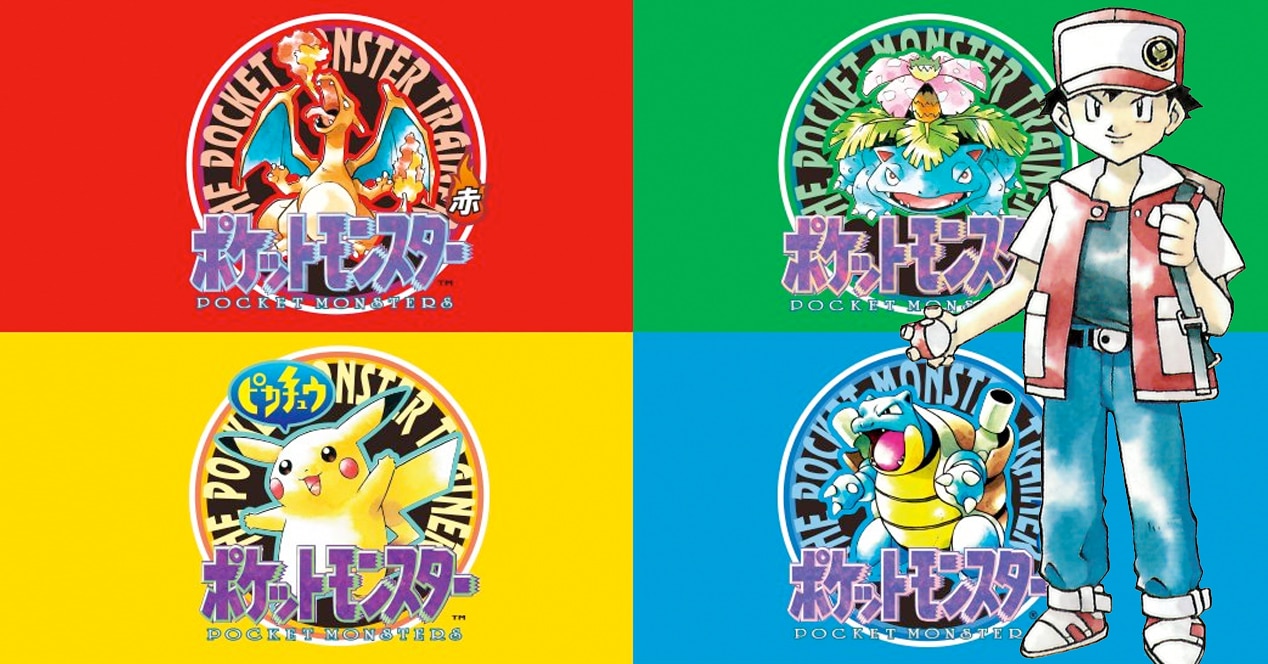
The first generation of Pokémon was released in Japan in early 1996 after about six years of development. They were published under the title Pocket Monsters , and were released in two versions: Red and Green . This strategy is said to have been devised by Shigeru Miyamoto, who reasoned that by releasing two separate editions and making it impossible to obtain all the creatures on a single cartridge, collecting the pocket monsters using the Link Cable, an accessory that connected two Game Boy consoles, would be encouraged. Collecting was the core mechanic conceived by Satoshi Tajiri, who drew inspiration from his own childhood of collecting and trading insects to create the foundations of what we know today as Pokémon.
The gameplay introduced in Pocket Monsters in 1996 has remained almost unchanged to this day . In the original titles, we took on the role of Satoshi (Red in the Western versions), and had to travel through the Kanto region to catch its creatures, face gym leaders, and defeat the Elite Four while completing the Pokémon encyclopedia for Professor Oak, which consisted of a total of 150 Pokémon (151 including Mew, which was originally a secret within the game's code).
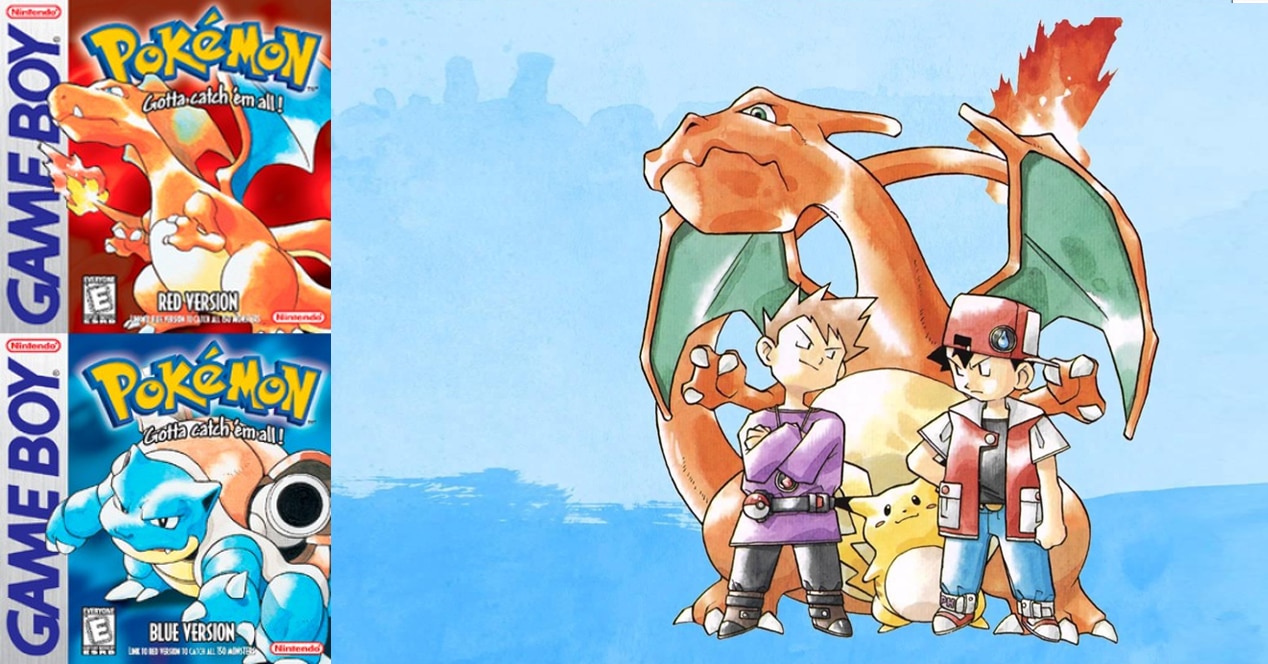
The two original titles achieved some success. A few months later, Pokémon Blue , a more polished version of Red and Green , was released in Japan and distributed to subscribers of CoroCoro magazine. This version, much simpler in terms of programming, served as the basis for the Western versions that we know as Pokémon Red and Pokémon Blue.
Before the release of the second generation, Nintendo, Creatures, and Game Freak launched Pokémon Yellow , whose mission was to extend the Game Boy's lifespan and create a larger player base willing to buy Pokémon Gold and Silver . Pokémon Yellow is essentially the same game, but with its plot adapted to that of the animated series.
Following the release of the third generation (and before Emerald ), these early Pokémon games received remakes for the Game Boy Advance, titled Pokémon FireRed and Pokémon LeafGreen . These versions not only featured improved graphics but also incorporated all the enhancements implemented in Ruby and Sapphire . They were further enhanced with a massive post-game content area filled with islands and a wealth of extra content, and the games included a device for wirelessly connecting Game Boy Advance consoles, replacing the outdated Link Cable.
More recently, a second remake of these titles was also made for Nintendo Switch, specifically of Pokémon Yellow with the titles Pokémon Let's Go Pikachu and Pokémon Let's Go Eevee , two games with simplified mechanics for younger players who had entered the Pokémon universe with games like Pokémon Go.
first generation pokemon
- 1 – Bulbasaur
- 2 – Ivysaur
- 3 – Venusaur
- 4 - Charmander
- 5 - Charmeleon
- 6 – Charizard
- 7 – Squirtle
- 8 – Wartortle
- 9 – Blastoise
- 10 – Caterpie
- 11 - Metapod
- 12 – Butter free
- 13 – Weedle
- 14 - Kakuna
- 15 – Beedrill
- 16 – Pidgey
- 17 – Pidgeotto
- 18 – Pidgeot
- 19 - Rattata
- 20 – Raticate
- 21 – Spearow
- 22 – Fearow
- 23 - Ekans
- 24 - Arbok
- 25 – Pikachu
- 26 - Raichu
- 27 – Sandshrew
- 28 - Sandslash
- 29 – Nidoran♀
- 30 - Nidorina
- 31 - Nidoqueen
- 32 – Nidoran♂
- 33 - Nidorino
- 34 - Nidoking
- 35 – Clefairy
- 36 – Clefable
- 37 – Vulpix
- 38 - Ninetales
- 39 – Jigglypuff
- 40 – Wigglytuff
- 41 - Tooth
- 42 - Golbat
- 43 – Oddish
- 44 - Gloom
- 45 – Felplume
- 46 - Paras
- 47 - Parasect
- 48 - Venonat
- 49 – Venomoth
- 50 - Diglett
- 51 - Dugtrio
- 52 – Meowth
- 53 – Persian
- 54 – Psyduck
- 55 –Golduck
- 56 –Mankey
- 57 - Primeape
- 58 – Growlithe
- 59 – Arcanine
- 60 - Poliwag
- 61 – Polywhirl
- 62 - Poliwrath
- 63 - Open
- 64 - Cadabra
- 65 - Alakazam
- 66 - Machop
- 67 - Machoke
- 68 – Machamp
- 69 - Bellsprout
- 70 – Weepinbell
- 71 – Victreebel
- 72 - Tentacool
- 73 - Tentacruel
- 74 - Geodude
- 75 – Graveler
- 76 – Golem
- 77 - Ponyta
- 78 - Rapidash
- 79 – Slowpoke
- 80 – Slowbro
- 81 - Magnemite
- 82 – Magneto
- 83 – Farfetch'd
- 84 - Doduo
- 85 - Dodrio
- 86 - Seal
- 87 – Dewgong
- 88 - Grimer
- 89-Muk
- 90 – Shellder
- 91 – Cloyster
- 92 – Gastly
- 93 – Haunter
- 94 – Gengar
- 95 – Onyx
- 96 – Drowzee
- 97 – Hypno
- 98 - Krabby
- 99 - Kingler
- 100 - Voltorb
- 101 – Electrode
- 102 – Exeggcute
- 103 – Exeggutor
- 104 - Cubone
- 105 - Marowak
- 106 – Hitmonlee
- 107 – Hitmonchan
- 108 – Lickitung
- 109 - Koffing
- 110 – Weezing
- 111–Rhyhorn
- 112 - Rhydon
- 113–Chansey
- 114 - Tangela
- 115 - Kangaskhan
- 116 - Horsea
- 117 – Seadra
- 118 – Ploughing
- 119 –Seaking
- 120-Staryu
- 121 - Starmie
- 122 – mr. mime
- 123 – Scyther
- 124 –Jynx
- 125 – Electabuzz
- 126 - Magmar
- 127 - Pinsir
- 128 – Taurus
- 129 – Magikarp
- 130 – Gyarados
- 131 – Lapras
- 132 - Said
- 133 – Eevee
- 134 - Vaporeon
- 135 – Jolteon
- 136 – Flareon
- 137 - Porygon
- 138 - Omanyte
- 139 - Omastar
- 140 – Kabutō
- 141 - Kabutops
- 142 – Aerodactyl
- 143 - Snorlax
- 144 – Articuno
- 145 – Zapdos
- 146 – Moltres
- 147 - Dratini
- 148 – Dragonair
- 149 – Dragonite
- 150 – Mewtwo
- 151 - Mew
Gold, Silver and Crystal: Second Generation

In 1999, a year after Pokémon Yellow , the Japanese got their hands on the second generation of Pokémon. Europeans wouldn't see Pokémon Gold and Pokémon Silver until 2001. These titles were exclusive to the Game Boy Color.

This time, the gameplay was completely identical, but we would explore the Johto region , where we would find 100 new Pokémon in addition to the 151 from the previous generation. Despite having similar graphics, the gameplay improved exponentially. The game's environments were in color. The cartridge's internal clock allowed for day and night cycles, as well as weekly events. Furthermore, after defeating the Elite Four and the Champion, we could board a ship and visit the old Kanto region ; these games and their remakes are the only titles in the entire series to maintain this structure.
But it didn't stop there. Very interesting mechanics were added, such as berry growth, the ability to equip items to Pokémon, the mobile phone, and most importantly: the arrival of two new types: Steel and Dark , to balance a metagame that was completely broken due to Psychic-type Pokémon.
Shortly after, Pokémon Crystal was released , showcasing a kind of director's cut using the same base game to tell a parallel story through the legendary Pokémon Suicune. Crystal featured many aesthetic and mechanical improvements, though the most popular feature among players was the ability to choose a female character for the adventure for the first time . According to Game Freak, this was originally intended to be an option in the original games, but it was removed due to insufficient cartridge space for programming both male and female dialogue. Crystal sold reasonably well, but it was essentially the same game with a few enhancements. Nevertheless, Game Freak would continue to repeat this strategy of re-releasing titles to extend the lifespan of the series.

A decade later, after the release of the fourth generation, Gold and Silver were remade for the Nintendo DS as Pokémon HeartGold and Pokémon SoulSilver . These two versions also include part of Eusine's storyline from Pokémon Crystal and are considered the two best Pokémon games ever made, thanks to their excellent adaptation, high-quality graphics, and vast maps filled with content and mysteries.
second generation pokemon
- 152 – Chikorite
- 153 – Bayleef
- 154 - Meganium
- 155 – Cyndaquil
- 156 – Quilava
- 157 - Typhlosion
- 158 – Totodile
- 159 – Croconaw
- 160 – Feraligatr
- 161 - Sentret
- 162 – Ovens
- 163 - Hoothoot
- 164 – Noctowl
- 165 - Ledyba
- 166 – Ledian
- 167 – Spinarak
- 168 - Ariados
- 169 – Crobat
- 170 – Chinchou
- 171 - Lanturn
- 172 - Pichu
- 173 – Cleffa
- 174 – Igglybuff
- 175 – Togepi
- 176 – Togetic
- 177 – Nature
- 178 - Chat
- 179 – Mareep
- 180 - Flaaffy
- 181 - Ampharos
- 182 – Bellossom
- 183 - Marill
- 184 - Azumarill
- 185 - Sudowoodo
- 186-politoed
- 187 – Hoppip
- 188 – Skiploom
- 189 - Jumpluff
- 190 – Aipom
- 191 – Sunkern
- 192 – Sunflora
- 193 - Combustion
- 194 – Wooper
- 195 – Quagsire
- 196 – Espeon
- 197 – Umbreon
- 198 - Murkrow
- 199 – Slowking
- 200 - Misdreavus
- 201 – Unown
- 202 – Wobbuffet
- 203 - Giraffe
- 204 – Pineco
- 205 – Forretress
- 206—Dunsparce
- 207 - Gligar
- 208 - Steelix
- 209 - Snubbull
- 210 - Granbull
- 211 - Qwilfish
- 212 – Scizor
- 213 – Shuckle
- 214 – Heracross
- 215 – Sneasel
- 216 - Teddiursa
- 217 - Ursaring
- 218 - Slugma
- 219 – Load
- 220 – Swinub
- 221 - Piloswine
- 222 - Corsola
- 223 - Remoraid
- 224 - Octillery
- 225 – Delibird
- 226 - Mantine
- 227 – Skarmory
- 228 – Houndour
- 229 – Houndoom
- 230 – Kingdra
- 231 - Phanpy
- 232 - Donphan
- 233 - Porygon2
- 234 – Stands
- 235 - Smeargle
- 236 – Tyrogue
- 237 – Hitmontop
- 238 – Smoochum
- 239 - Elekid
- 240 - Magby
- 241 - Miltank
- 242 – Blissey
- 243 - Raikou
- 244 – Entei
- 245 - Suicune
- 246 - Larvitar
- 247 - Pupitar
- 248 – Tyranitar
- 249 – Lugia
- 250 – Ho Oh
- 251 – Celebrities
Ruby, Sapphire and Emerald: Third Generation

The third generation of Pokémon arrived on Game Boy Advance in mid- 2003 (late 2002 in Japan), debuting a new graphic style —remember that the first and second generations shared an engine and arrived at the end of the Game Boy's life cycle—.
Ruby and Sapphire added 135 new creatures , bringing the total to 386. However, for the first time, the Pokédex we had to complete in Hoenn was smaller. In fact, until the release of FireRed , LeafGreen , and the Pokémon titles for GameCube, many of the first and second generation Pokémon could not be obtained with the original Ruby and Sapphire cartridges.

Pokémon underwent a major mechanical revolution in this generation. The hidden system for scoring Pokémon stats was redesigned—though it wouldn't be fully refined until the Nintendo DS titles—and more elements were added to the metagame : Natures and special abilities . Natures added more variety to the creatures, boosting one characteristic while weakening another. On the other hand, special abilities allowed Pokémon to be used with more creative strategies. Double battles were also added , as well as the inclusion of weather , which can be summoned by Pokémon or simply affect the battle depending on the weather conditions. Pokémon Contests also appeared , playing a more significant role here than in later games.
A couple of years later, Pokémon Emerald would repeat the strategy of Yellow and Crystal . This time, the game merged the stories of Ruby and Sapphire with their villains, Team Aqua and Team Magma. It's a more interesting game than the originals, but the number of improvements is minimal in comparison. That said, it also features a fairly varied post-game .
In 2014 , Game Freak released a remake of these two titles for the Nintendo 3DS, even though it might have been considered unnecessary. Interesting sixth-generation mechanics were added, and the plot was explored a bit more, but in a very subtle and safe way. The reception was good, but it didn't reach the standards previously set by HeartGold and SoulSilver.
The third generation marked the golden age of Pokémon. Ruby / Sapphire , FireRed/LeafGreen , and Emerald became the top 3 best-selling games for Game Boy Advance.
third generation pokemon
- 252 – Treecko
- 253 – Grovyle
- 254 – Sceptile
- 255 – Torchic
- 256 – Combusken
- 257 – Blazeken
- 258 – Mudkip
- 259 – Marshtomp
- 260 –Swampert
- 261 - Poochyena
- 262 – Mightyena
- 263 – Zigzag
- 264 – Linone
- 265 - Wurmple
- 266 - Silcoon
- 267 – Beautifully
- 268 – Helmet
- 269 – Dustox
- 270 – Lotted
- 271 - Lombre
- 272 - Ludicolo
- 273 – Seedot
- 274 – Nuzleaf
- 275 –Shiftry
- 276–Taillow
- 277 – Swellow
- 278 – Wingull
- 279 - Pelipper
- 280 – Ralts
- 281 - Kirlia
- 282 - Gardevoir
- 283 - Surskit
- 284 – Masquerain
- 285 – Shroomish
- 286 – Breloom
- 287 – Slakoth
- 288 - Vigoroth
- 289 – Slaking
- 290 - Nincada
- 291 - Ninjask
- 292 – Shedinja
- 293 – Whismur
- 294 – Loudred
- 295 – Exploud
- 296 - Makuhita
- 297 – Hariyama
- 298 - Azurill
- 299 – Nosepass
- 300 - Skitty
- 301 - Delcatty
- 302 – Sableye
- 303 - Mawile
- 304 - Aron
- 305 – Lairon
- 306 – Aggron
- 307 - Meditates
- 308 - Medicham
- 309 – Electric
- 310 – Manectric
- 311 - Plusle
- 312 - Mine
- 313 - Volbeat
- 314 - Illumise
- 315 - Roselia
- 316 – Gulpin
- 317 – Swalot
- 318 - Carvanha
- 319 - Sharpedo
- 320 - Wailmer
- 321 - Wailord
- 322 - Numel
- 323 - Camerupt
- 324 - Torkoal
- 325 - Spoink
- 326 – Grumpy
- 327 - Spinda
- 328 - Trapinch
- 329 - Vibrated
- 330–Flygon
- 331 - Cacnea
- 332 - Cacturne
- 333 – Swablu
- 334 – Altars
- 335 - Zangoose
- 336 - Seviper
- 337 - Lunatone
- 338 – Solrock
- 339 – Barboach
- 340 – Whiscash
- 341 –Corphish
- 342 – Crawdaunt
- 343 - Baltoy
- 344 –Claydol
- 345 - Lileep
- 346 – Cradilly
- 347 - Anorith
- 348 - Armaldo
- 349 - Feebas
- 350 - Milotic
- 351 – Castform
- 352 - Kecleon
- 353 – Shuppet
- 354 – Banette
- 355 - Duskull
- 356 – Dusclops
- 357 - Tropius
- 358 – Chimecho
- 359 - Absol
- 360 - Wynaut
- 361 - Snorunt
- 362 – Glalie
- 363 – Spheal
- 364 - Sealeo
- 365 – whale rein
- 366 – Clamper
- 367 - Huntail
- 368 - Gorebyss
- 369 - Relicanth
- 370 – Luvdisc
- 371 - Wagon
- 372 – Shelgon
- 373 – Salamence
- 374 – Beldum
- 375 - Metang
- 376 – Metagross
- 377 - Regirock
- 378 - Regice
- 379 - Registeel
- 380 - Latias
- 381 - Latios
- 382 - Kyogre
- 383 - Groudon
- 384 - Rayquaza
- 385 – Jirachi
- 386 - Deoxys
Diamond, Pearl and Platinum: Fourth Generation

We arrived on the Nintendo DS, where we were able to play Pokémon Diamond and Pearl in the summer of 2007 in our country. Sinnoh would be the setting in which Game Freak would explain the genesis of the Pokémon world, with 135 new creatures and a pretentious team of villains.
The biggest gameplay improvement of this generation was somewhat hidden. To add more variety to the Pokémon, the genetic and effort system for the creatures was finalized, and physical and special attacks were separated . Now, the type of attack no longer depended on the Pokémon's type, creating a major revolution within the metagame that went largely unnoticed, although many players did notice the changes without fully understanding the differences compared to previous titles.
On the other hand, the art style took a big leap forward, but it wasn't entirely positive. Diamond and Pearl were incredibly slow and poorly optimized games . Loading areas was atrocious, and crashes and stutters during gameplay were quite common . These titles also introduced the GTS , which allowed players to trade Pokémon with trainers worldwide, as well as battle with them.

Despite being beloved by the community, Diamond and Pearl demonstrated that Game Freak had neglected its titles for the first time. They arrived quite late, the story was rather absurd, and the poor optimization and limited variety of wild creatures led many players to abandon the series shortly after their release.
A year later , Platinum would arrive , with a much more polished design and a more interesting story—if you want to play a fourth-generation game, it's recommended to go straight to this one.
Fortunately, Game Freak was able to redeem itself by releasing the second-generation remakes , with a much more refined engine, and cleaning up some of the impression that Pearl and Diamond gave in their early days.

More than a decade later, the Nintendo Switch received remakes of these two titles: Pokémon Shining Diamond and Shining Pearl . Developed by an independent studio, the art style didn't quite match what we would later see in the eighth generation. It was a 1:1 remake of the original with improved graphics, but a rather disappointing art direction that proved the original fourth-generation games were still more engaging.
fourth generation pokemon
- 387 – Turtwig
- 388 – Grotle
- 389 – Torterra
- 390 – Chimchar
- 391 – Monferno
- 392 – Hellnape
- 393 – Piplup
- 394 – Prinplup
- 395 – Empoleon
- 396 –Starly
- 397 – Staravia
- 398 – Staraptor
- 399 – Bidoof
- 400 – Bibarel
- 401 – Kricketot
- 402–Kricketune
- 403–Shinx
- 404 – Luxius
- 405 – Luxray
- 406–Budew
- 407 – Roses
- 408 – Cranids
- 409 – Rampardos
- 410–Shieldon
- 411 – Bastiodon
- 412–Burmy
- 413 – Wormadam
- 414 –Mothim
- 415–Combee
- 416 – Vespiquen
- 417 – Pachirisu
- 418 – Buizel
- 419 – Floatzel
- 420 – Cherubi
- 421 – Cherrim
- 422 – Shellos
- 423 – Gastrodon
- 424 – Ambipom
- 425 – Drifloon
- 426 – Drifblim
- 427–Buneary
- 428 – Lopunny
- 429 – Mismagius
- 430 – Honchkrow
- 431 – Glameow
- 432 – Purugly
- 433 – Chingling
- 434 –Stunky
- 435 – Skuntank
- 436 – Bronzor
- 437 – Bronzong
- 438–Bonsley
- 439 – Mime Jr.
- 440 – Happy
- 441 - Chatot
- 442 – Spiritomb
- 443 – Gible
- 444 – Gabit
- 445 – Garchomp
- 446 – Munchlax
- 447 – Riolu
- 448 – Lucario
- 449 – Hippopotamus
- 450–Hippowdon
- 451 – Skorupi
- 452 – Drapion
- 453 – Croagunk
- 454 – Toxicroak
- 455 – Carnivine
- 456 – Finneon
- 457 – Lumineon
- 458–Mantyke
- 459–Snover
- 460 – Abomasnow
- 461 – Weavile
- 462 – Magnezone
- 463 – Lickilicky
- 464 – Rhyperior
- 465 – Tangrowth
- 466 – Electivire
- 467 – Magmortar
- 468 – Togekiss
- 469 – Yanmega
- 470–Leafeon
- 471 – Glaceon
- 472 – Gliscor
- 473 – Mamoswine
- 474 – Porygon-Z
- 475 – Gallade
- 476 – Probopass
- 477 – Dusknoir
- 478 – Froslass
- 479 – Rotom
- 480 – Uxie
- 481 – Mesprit
- 482 – Azelf
- 483 – Dialga
- 484 – Palkia
- 485 – Hetran
- 486 – Regulates
- 487 – Giratina
- 488 – Cresselia
- 489 – Phione
- 490–Manaphy
- 491 – Darkrai
- 492 – Shaymin
- 493 – Arceus
- 494 – Victini
- 495 – Snowy
- 496 – Servine
- 497 – Serperior
- 498 –Tepig
- 499 – Pignite
- 500 – Emboar
- 501–Oshawott
- 502–Dewott
- 503 – Samurott
- 504 – Patrate
- 505 –Watchog
- 506 – Lilipup
- 507 –Herdier
- 508–Stoutland
- 509–Purrloin
- 510–Liepard
- 511 – Grooming
- 512 – Siming
- 513 – Pansing
- 514 – Simise
- 515 – Panpour
- 516 – Simipur
- 517 – Munna
- 518 – Musharna
- 519 – Pidove
- 520 – Tranquility
- 521 – Unfezant
White, Black, White 2 and Black 2: Fifth Generation

Game Freak took a risk in the fifth generation. However, his obsession with numbers would end up tarnishing what is objectively one of the best modern generations of Pokémon.
Building upon an evolved fourth-generation engine, Pokémon Black and White arrived in 2010 on a Nintendo DS that was already at its limits. We began in the Unova region with no fewer than 156 new Pokémon —even more than in the original games. This encouraged exploration and the gathering of information from an ecosystem that offered new creatures everywhere. Even so, Black and White suffered from the same flaw as Diamond and Pearl, offering little variety in the wild Pokémon on each route. This was a decision made by Junichi Masuda himself, who wanted to give the game a facelift by offering only new Pokémon, temporarily leaving behind creatures from other regions.

Even so, Unova (based on the United States, the first Pokémon region not inspired by Japan) would become the setting for the most mature storyline we've seen in the main Pokémon series. A team of villains seemingly fighting for the liberation of Pokémon, a family-run organization, a game introduction with a cinematic that has nothing to do with Pokémon, and a truly chaotic yet well-scripted ending.
The story continued a couple of years later in Pokémon Black 2 and White 2 , with much more innovation. Instead of simply showing us the same game with some minor changes, these two new editions were a complete sequel set two years after the original game, where we guide the hero who will save Unova from the resurgence of Team Plasma . Furthermore, the game distinguished itself from the first installment by beginning the adventure in a new town in the north of the map, making the route we must follow in the sequel different and minimizing the possibility of it feeling repetitive.
Both Black and White and their sequels are content-rich games, with plenty of exploration and fascinating creatures. The games' connectivity was improved, adding multiple services that enhanced gameplay , such as Pokémon Dream World, which allowed players to obtain special hidden abilities in Pokémon through a cloud service.

It can't be said that they sold badly, but Game Freak doesn't seem to have achieved the success they expected despite all the enthusiasm they poured into these four titles. Even so, this could be due to multiple factors, such as the fatigue caused by the previous generation or the rise of Nintendo DS piracy , which may have severely impacted sales. Another reason that significantly hampered these games was the lack of integration of Pokémon from previous generations—this was done in the sequel as part of the post-game content. Although it was a very smart decision, many who played these titles at the time harshly criticized this change, so Game Freak wouldn't hesitate to take a step backward in subsequent generations. Now, years later, veteran players have begun to appreciate the value of this generation and the risk Masuda took, seeing the difference in quality between this generation and the more recent ones.
fifth generation pokemon
- 522 – Blitzle
- 523 – Zebstrika
- 524 – Roggenrola
- 525–Boldore
- 526 – Gigalith
- 527 – Woobat
- 528 – Swoobat
- 529 – Drilbur
- 530–Excadrill
- 531 – Audino
- 532 – Timburr
- 533 – Gurdurr
- 534 – Conkeldurr
- 535–Tympole
- 536 – Throbbing
- 537 – Seismitoad
- 538 – Throh
- 539–Sawk
- 540–Sewaddle
- 541–Swadloon
- 542 – Leavanny
- 543 – Venipede
- 544 – Whirlipede
- 545 – Scolipede
- 546 – Cottonee
- 547 – Whimsicott
- 548 – Petylil
- 549 – Lilligant
- 550 – Basculin
- 551 – Sandile
- 552 – Krokorok
- 553 – Krookodile
- 554 – Darumaka
- 555 – Darmanitan
- 556 – Maractus
- 557–Dwebble
- 558 –Crustle
- 559 –Scraggy
- 560 –Scrafty
- 561 – Sigilyph
- 562 – Yamask
- 563 – Cofagrigus
- 564 – Tirtouga
- 565 – Carracosta
- 566 – Archen
- 567 – Archeops
- 568 – Trubbish
- 569 – Garbodor
- 570 – Floor
- 571 – Zoroark
- 572 – Minccino
- 573 – Cincino
- 574 – Gothite
- 575 – Gothorite
- 576 – Gothitelle
- 577 – Solosis
- 578 – Duosion
- 579 – Reuniclus
- 580–Ducklett
- 581–Swanna
- 582 – Vanillite
- 583 – Vanillish
- 584 – Vanilluxe
- 585–Deerling
- 586–Sawsbuck
- 587 – Emolga
- 588 – Karrablast
- 589 – Escavalier
- 590 – Foongus
- 591 – Amoonguss
- 592 – Frillish
- 593 – Jellicent
- 594 – Alomomola
- 595 – Joltik
- 596 – Galvantula
- 597 – Ferroseed
- 598–Ferrothorn
- 599–Klink
- 600–Klang
- 601 – Klinklang
- 602 – Tynamo
- 603 – Eelektrik
- 604 – Eelektross
- 605 – Elgyem
- 606 – Beheeyem
- 607–Litwick
- 608–Lampent
- 609 – Chandelure
- 610 – Axew
- 611 – Fraxure
- 612 – Haxorus
- 613 – Cubchoo
- 614–Beartic
- 615 – Cryogonal
- 616–Shelmet
- 617 – Accelgor
- 618 – Stunfisk
- 619 – Mienfoo
- 620 – Mienshao
- 621 – Druddigon
- 622 – Golett
- 623 – Golurk
- 624–Pawniard
- 625–Bisharp
- 626 – Bouffalant
- 627 – Rufflet
- 628–Braviary
- 629 – Vullaby
- 630 – Mandibuzz
- 631 – Heatmore
- 632–Durant
- 633 – Deino
- 634 – Zweilous
- 635 – Hydreigon
- 636 – Larvest
- 637 – Volcano
- 638 – Cobalion
- 639 – Terrakion
- 640 – Virizion
- 641 – Tornadus
- 642 –Thundurus
- 643 – Reshiram
- 644 – Zecrom
- 645 – Landorus
- 646 – Kyurem
- 647 – Keldeo
- 648 – Meloetta
- 649 – Genesect
- 650–Chespin
- 651 – Quilladin
- 652–Chesnaught
- 653 – Fennekin
- 654 – Braixen
- 655 – Delphix
- 656 – Froakie
- 657 – Frogadier
- 658 – Greninja
- 659–Bunnelby
- 660–Diggersby
- 661 – Fletchling
- 662–Fletchinder
- 663 – Talonflame
- 664 – Scatterbug
- 665 – Spewpa
- 666 – Vivillon
- 667 – Lythian
- 668 – Pyroar
- 669 – Flabebe
- 670 – Fleet
- 671 – Florges
- 672 – Skiddo
- 673 – Gogoat
- 674 – Pancham
- 675 – Pangoro
- 676 – Furfroo
- 677 – Espurr
X and Y: Sixth Generation

The sixth generation of Pokémon would ultimately lay the foundation for all subsequent games in the series. From Pokémon X and Pokémon Y onward, each generation has included a unique mechanic that is only available in a limited way within that specific game. In these editions, we were introduced to the phenomenon of Mega Evolution , but later games would bring Z-Moves and Dynamax. Furthermore, a new elemental type was added for the first time since the second generation: the Fairy type . This was done to balance the metagame , reducing the prominence of Dragon, Dark, and Fighting types, and giving more power to Poison and Steel-type Pokémon.

The Kalos region , inspired by France, introduced only 72 new Pokémon . Despite this, they were quite versatile and interesting creatures. Additionally, modifications were made to existing Pokémon, adding the Fairy type. With these additions, the total number of Pokémon in this generation reached 721.

Pokémon X and Pokémon Y were Game Freak's first two titles for the Nintendo 3DS. They arrived in the fall of 2013. These editions marked a smooth transition to 3D. The games allowed players to freely control the character with the joystick or switch to the D-pad, reverting to an outdated grid-based movement system. The story also lost much of its impact, becoming rather superficial and unintriguing, representing a step backward in that regard.
However, Mega Evolution represented a major leap forward for the series. Some Pokémon could temporarily evolve in battle into an enhanced version of themselves, with improved stats, changed special abilities, and even altered elemental types in some cases. Thanks to this, we saw alternate designs for Charizard (Mega X and Mega Y) and Mewtwo, among many others.
A year later, using the same graphics engine, the third-generation remakes , Pokémon Alpha Sapphire and Omega Ruby , were released. Their main novelty was the inclusion of Mega Evolutions. However, the remake is objectively worse than the original game and is also of lower quality than X and Y.
sixth generation pokemon
- 678 – Meowstic
- 679–Honedge
- 680 – Double
- 681 – Aegislash
- 682 – Spritzee
- 683 – Aromatisse
- 684 – Swirlix
- 685 – Slurpuff
- 686 – Inkay
- 687 – Malamar
- 688 – Binacle
- 689–Barbaracle
- 690 – Skrelp
- 691 – Dragalge
- 692 –Clauncher
- 693 –Clawitzer
- 694 – Helioptile
- 695 – Heliolisk
- 696–Tyrunt
- 697 – Tyrantrum
- 698 – Amaura
- 699 – Aurora
- 700–Sylveon
- 701 – Hawlucha
- 702–Dedenne
- 703–Carbink
- 704 – Goomy
- 705 – Sliggoo
- 706–Goodra
- 707 – Klefki
- 708 – Phantump
- 709–Trevenant
- 710 – Pumpkaboo
- 711 – Gourgeist
- 712–Bergmite
- 713 – Avalugg
- 714 – Noibat
- 715 – Nightiver
- 716 – Xerneas
- 717 – Yveltal
- 718 – Zygarde
- 719 – Diancia
- 720 – Touch
- 721 – Volcano
- 722–Rowlet
- 723 – Darthrix
- 724 – Decidueye
- 725–Litten
- 726 – Torracat
- 727 – Incineroar
- 728 – Popplio
- 729–Brionne
- 730 – Primarine
- 731 – Pikipek
- 732 –Trumbeak
- 733 – Toucannon
- 734 – Yungoos
- 735 – Gumshoos
- 736 – Grubbin
- 737 – Charjabug
- 738 – Vikavolt
- 739–Crabrawler
- 740 – Crabminable
- 741 – Oricorio
- 742 – Cutiefly
- 743 – Ribombee
- 744–Rockruff
- 745 – Lycanroc
- 746–Wishiwashi
- 747 – Mareanie
- 748 – Toxapex
- 749–Mudbray
Sun, Moon, Ultra Sun and Ultra Moon: Seventh Generation

A couple of years later, in 2016, Game Freak took another risk. Sun and Moon transported us to Alola , an archipelago based on Hawaii with its own rhythm and philosophy of life. There were no gyms, badges, or Elite Four as such. Instead, we would have to complete the ' island challenge ,' a kind of island-hopping quest where we would be tested in many ways.
But that wasn't the only change. In fact, Sun and Moon are the strangest Pokémon games in the main series—not that this is a bad thing, of course. Another very significant change was the introduction of regional forms , meaning Pokémon we know from other regions but that look different in Alola. Examples include the Alolan Exeggutor, which is a giant palm tree, the Ice-type Vulpix, and the alternate, sinister version of Meowth, to name a few. This change would continue in later editions, offering new variations of familiar creatures in subsequent regions. Alola contributed 88 new creatures , bringing the total number of Pokémon in the global Pokédex to 809.

The unique mechanic of Pokémon Sun and Moon is Z-Moves . These are essentially techniques that we learn during the island challenge, allowing our Pokémon to perform an extra attack per battle beyond the four we've been able to use as a lifetime limit.
The story wasn't bad at all. It retained the typical camaraderie of previous games, but introduced a rather interesting team of villains and another group of characters, the Aether Foundation , with somewhat questionable aims, whose leader was the mother of the protagonist's friend. This title also introduced us to the Ultra Beasts , a series of Pokémon from Ultra Space. It also changed another classic Pokémon mechanic: for the first time, we would say goodbye to Hidden Machines (HMs) and start using PokéRide.

Sun and Moon were two very good Pokémon titles that we could even rate highly, despite the Nintendo 3DS barely being able to handle them. However, a year later, Game Freak reused their assets to bring us a kind of director's cut of Sun and Moon that was a complete disaster: Pokémon Ultra Sun and Pokémon Ultra Moon . These two titles were identical to the originals, only with plot fragments replaced by modified ones that altered the story and made the entire final cut utterly nonsensical. The Ultra Beasts were also explored in a bit more depth—in the original game they were treated very quickly and superficially as a rushed post-game —but without a doubt, Ultra Sun and Ultra Moon are two of the worst games in the entire series, since they not only add nothing new, but also tarnish the good work done with the original games.
seventh generation pokemon
- 750–Mudsdale
- 751 – Dewpider
- 752 – Araquanid
- 753 – Fomantis
- 754 – Lurantis
- 755 – Morelull
- 756 – Shiinotic
- 757 – Salandit
- 758 – Salazzle
- 759 – Stuffful
- 760 –Bewear
- 761 – Bounsweet
- 762–Steenee
- 763 – Tsareena
- 764–Comfey
- 765 – Oranguru
- 766 – Passimian
- 767 – Wimpod
- 768 – Golisopod
- 769–Sandygast
- 770–Palossand
- 771 – Pyukumuku
- 772 – Type: Null
- 773–Silvally
- 774 – Minor
- 775 – Komala
- 776 – Turtonator
- 777 - Togedemaru
- 778 – Mimikyu
- 779 – Bruxish
- 780 – Drampa
- 781 – Dhelmise
- 782 – Jangmo-o
- 783 – Hakamo-o
- 784 – Kommo-o
- 785 – Tapu Koko
- 786 – Tapu Lele
- 787 – Tapu Bulu
- 788 – Tapu Fini
- 789 – Cosmog
- 790 – Cosmoem
- 791 – Solgaleo
- 792-Lunala
- 793 – Nihilego
- 794 – Buzzwole
- 795 – Pheromosa
- 796 – Xurkitree
- 797 – Celesteela
- 798 – Kartana
- 799 – Guzzlord
- 800 – Necrosma
- 801 – Magearna
- 802–Marshadow
- 803 – Poipole
- 804 – Naganadel
- 805–Stakataka
- 806–Blacephalon
- 807 – Zeraora
- 808–Meltan
- 809 – Melmetal
- 810–Grookey
- 811–Thwackey
- 812–Rillaboom
- 813 – Scorbunny
- 814 – Raboot
- 815 – Cinderace
- 816 – Sobble
- 817 – Drizzle
- 818 – Inteleon
- 819–Skwovet
- 820–Greedent
- 821–Rookidee
- 822–Corvisquire
- 823 –Corviknight
- 824 – Blipbug
- 825–Dottler
- 826 – Orbeetle
- 827–Nickit
- 828 – Thievul
- 829 – Gossifleur
- 830 – Eldegoss
- 831 – Wooloo
- 832–Dubwool
- 833–Chewtle
- 834–Drednaw
- 835–Yamper
- 836 – Boltund
- 837 – Rolycoly
Sword and Shield: Eighth Generation

After a few years in which Nintendo Switch only saw the remake of Pokémon Yellow , at the end of 2019 the eighth generation of the franchise was launched for Nintendo's hybrid console, bringing with it 89 new Pokémon and raising the total number to 898.

The story of Pokémon Sword and Shield takes place in Galar , a region based on England. The game brought back the classic Gym system, but gave it a makeover with the new mechanic introduced in this generation: the Dynamax phenomenon . In Galar, Pokémon battles are held in large stadiums throughout the region, a nod to English football. During battles, trainers can use an energy that transforms their Pokémon into giants for three turns. Some only change in size (Dynamax), while others also undergo a transformation (Gigantamax). Additionally, new regional Pokémon from Galar were also added , just as was done previously in Alola.

The Sword and Shield editions were highly anticipated at the time, as the Nintendo Switch seemed like an orphaned console without a mainline Pokémon game. However, these two titles left much to be desired. Development was very rough—the game was even riddled with bugs at launch—and the environments were just that: environments, mere scenery. Exploration was minimal, and to top it all off, the games had two paid DLCs to expand the content that should have been included in the initial launch.
Even so, the game's overall foundation is solid . In fact, the opening hours are engaging, and the Galarian versions of the Pokémon are brilliant. But it seems Game Freak was content with just passing the test. Not only are the graphics quite disappointing, but so is the plot, which is completely empty and devoid of any mystery.
In early 2021, Game Freak showcased its new projects for the Nintendo Switch. First, they announced two remakes of Diamond and Pearl that would not be released during this generation and would be developed independently by ILCA.
On the other hand, Game Freak would focus its efforts on Pokémon Legends: Arceus , a semi-open world title slated for release in late January 2022. The game would take us to the past, to the Hisui region, where humans and Pokémon had yet to establish bonds of friendship and where creatures now extinct still exist. Although initially considered a spin -off , The Pokémon Company's approach to this title suggests it's part of the main series. Pokémon Legends: Arceus is a title that focuses purely on gameplay. Players move freely through numerous environments with Pokémon that no longer engage in combat, but instead confront us directly in the open world. Its core mechanic is Pokémon capture, much like Pokémon GO. Another significant addition to this game was the Hisui forms, Pokémon that existed in the past but became extinct for one reason or another.
Scarlet and Purple: Ninth Generation

The ninth generation of Pokémon was released in November 2022, a few months after the eighth generation concluded with Pokémon Legends: Arceus . Scarlet and Purple take us to Paldea, a region based on Spain. The idea behind these titles was to continue the open-world approach begun in Legends , but focused on the system we've seen throughout the main series games.
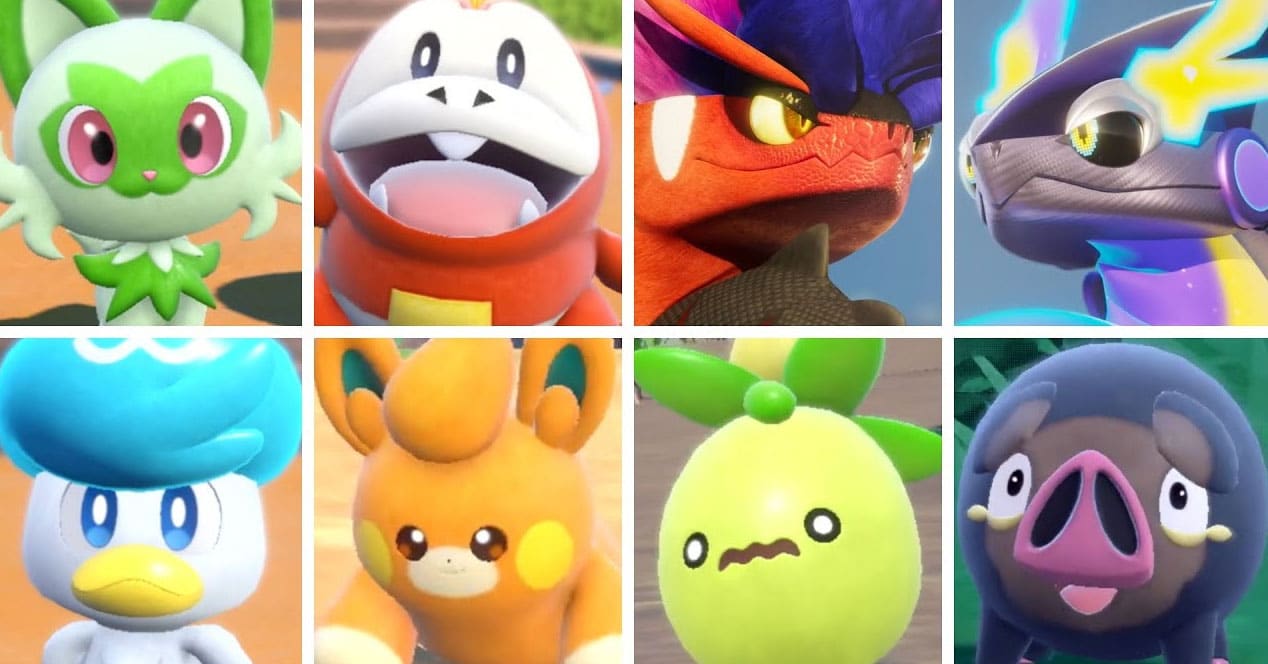
We will begin our adventure by customizing our trainer. Shortly after, Professor Carnation will give us our first Pokémon in his mansion, which can be Spirigatito, Fuecoco or Quaxly. Clavel will welcome us to the Orange / Grape School, and he will introduce us to our class representative, Mencía, with whom we will have our first fight. After beating him, Mencía will lend himself to guide us through our adventure and measure himself in combat against us from time to time.

During our journey to Plateau City, our character will suffer a minor mishap and be saved by Koraidon or Miraidon . The dragon will be very weak, but will accompany us as thanks for being fed. Later, it will become a PokéRide , allowing us to use it to travel at high speed across Paldea by land, sea, and air.
Once in the region's capital, we will be given the three objectives of the game, although there are actually four:
- victory cruise: or rather, the challenge of the gyms. It is the classic challenge of Pokémon. There are 8 leaders in Paldea that we must challenge to get their medals. Once achieved, we will face each other in the Pokémon League to obtain the rank of champion. For the first time, we will not be able to challenge the High Command again once the adventure is over.
- The Stardust Way: It is a special mission that is entrusted to us by a mysterious character through our RotomDex. The Star Team is a group of students from the school who do not attend classes and who are causing some ruckus for Paldea. We will have to stop the feet of their five leaders in their different bases.
- legendary path: This is the mission that Damián entrusts us with. This character is the son of Professor Albora in Scarlet, and the son of Professor Turo in Purple. He knows the dragon, but he wants nothing to do with it because, according to what he says, it ruined his life. We will help Damien in his search for spices by fighting Dominant Pokémon.
- Treasure hunt: This mission is given to us by Professor Clavel, the director of the Orange Academy. It's like a final year project. It does not tell us what it is about, but without a doubt, it is the most interesting part of this game.

During this generation, the main mechanic is Teracrystallization . By using the Teracrystall Orb given to us by Mencia, we can activate our Pokémon's teratype. Once per battle, and as long as the orb is charged, we activate a transformation that changes our Pokémon's secondary type to its teratype. This adds a lot of depth, as each Pokémon can have any teratype (out of the 18 types in Pokémon), thus acquiring new strengths and weaknesses during battle. If our Pokémon's teratype matches its type, the bonus obtained from using attacks of that type (STAB) will be amplified.
Regarding the new Pokémon , we have several new features beyond the new creatures native to this region:
- Paldea Shapes: Pokémon that we already knew, but that have a special form in Paldea.
- New third evolutions: Some creatures like Primeape or Bisharp, which had lost some attractiveness at a competitive level, have found new evolutionary forms in Paldea.
- converging forms: Pokémon that look like creatures from the first generation, but have come to that form by pure convergent evolution, just like in nature. This is the case of Wigglet or Toedscool.
- pokemon paradox: not to do spoilers, we will simply say that they are the creatures that live in the Paldea Pit.
Returning to the main plot, for the first time in Pokémon, we're not dealing with a linear, corridor-style journey. Instead, we're free to choose the order of our adventure . However, there are some barriers in Paldea that will try to prevent us from breaking the game. Paradoxically, one of the game's main problems is that it isn't clear enough in guiding us through the adventure. Scarlet and Purple have a specific order of events—you can always ask a Nurse Joy at a service stop for guidance—so it's quite common to skip an event. That's why many people look for the game's event order , which we've included in the following image (no spoilers , don't worry).

Regarding the reception of the games , we have one of the most divided opinions in the entire history of the series. Scarlet and Purple were well-received by the press , with scores exceeding "good" and often achieving "excellent." However, when they finally reached the general public, Pokémon fans were divided into two camps. The ninth-generation Pokémon games were released for the Nintendo Switch in a rather premature state . The titles were riddled with bugs—mostly graphical, though some were technical as well. Added to this were the games' performance issues, with constant frame rate drops, and graphics that still failed to convince most players.
In addition, this generation loses some of the essence of Pokémon . The cities and towns of Paldea are mere scenery. You can't interact with the NPCs. Trainer battles are optional, and you can run away from them once they start. In short, Scarlet and Purple are entertaining games, but quite jarring compared to the franchise's past.
ninth generation pokemon
- 906 Sprigatito
- 907 Florcat
- 908 Meowscarade
- 909 Fuecoco
- 910 Croheat
- 911 Skeledirge
- 912 Quaxly
- 913 Quaxwell
- 914 Quaquaval
- 915 Lechonk
- 916 Oinkologne
- 917 Dudunsparce
- 918 Tarountula
- 919 Spidops
- 920 Nymble
- 921 Lokyx
- 922 Rello
- 923 Rabskah
- 924 Greavard
- 925 Houndstone
- 926 Flittle
- 927 Espathra
- 928 Farigiraf
- 929 Wiglett
- 930 Wugtrium
- 931 Dondozo
- 932 Veluzia
- 933 Finizen
- 934 Palafin
- 935 Smoliv
- 936 Dolliv
- 937 arboliva
- 938 Capsakid
- 939 Scovillain
- 940 Tadbulb
- 941 Bellibolt
- 942 Varoom
- 943 Revavroom
- 944 Orthworm
- 945 Tandemaus
- 946 Maushold
- 947 Cetoddle
- 948 Cetin
- 949 Frigibax
- 950 Arctibax
- 951 Baxcalibur
- 952 Tatsugiri
- 953 Cyclize
- 954 pawmi
- 955 Pawmo
- 956 Pawmot
- 957 Wattrel
- 958 Kilowattrel
- 959 Bombardier
- 960 Squawkabilly
- 961 Flamingo
- 962 Klawf
- 963 Nacli
- 964 Naclstack
- 965 Garganac
- 966 Glimmet
- 967 Glimmora
- 968 Shroodle
- 969 Grafaiai
- 970 Fidough
- 971 Dachsbun
- 972 Maschiff
- 973 Mabosstiff
- 974 Bramblin
- 975 Brambleghast
- 976 Gimmighoul
- 977 Gholdengo
- 978 Longfang
- 979 Little Tail
- 980 Mushroom Fury
- 981 Fluttermane
- 982 Reptalada
- 983 Pelarena
- 984 Moonbraam
- 985 Ferrodada
- 986 Ferrosac
- 987 Ferropalmas
- 988 Ferroneck
- 989 iron moth
- 990 Iron Barbs
- 991 Iron Paladin
- 992 Ting Lu
- 993 Chien-Pao
- 994 Wo-Chien
- 995 Chi Yu
- 996 Koraidon
- 997 Miraidon
- 998 Tinkatink
- 999 Tinkatuff
- 1000 Tinkaton
- 1001 Charcadet
- 1002 Wardrobe
- 1003 Ceruledge
- 1004 Toedscool
- 1005 Toedscruel
- 1006 Kingambit
- 1007 Clodsire
- 1008 Annihilape
What are the best games to start in Pokémon?

There is usually quite a bit of debate about which are the best Pokémon games. In most cases, you will find people who will tell you that the latest releases are not exactly the best.
Choosing one title over another is a matter of taste. It almost always depends on the type of player you are and the experience you're looking for.
- If you're looking for a game to start, any of the recent releases will work for you. Pokémon has always been characterized as a game that doesn't require you to be an expert to pass the story —it's another thing to play at a competitive level. Any title for Nintendo Switch is suitable for players who want to take their first steps in the franchise, whatever their age. However, if the only contact you have with Pokémon is Pokémon GO, our recommendation is to start with Pokémon Let's GO Pikachu / Eevee for Nintendo Switch. It is a remake of Pokémon Yellow with limitations, but very well worked.
- On the other hand, if you want to enjoy a complete adventure, there are two titles that you should try yes or yes:
- Pokémon HeartGold/Soulsilver: By far, the best remakes in the history of the franchise. They are long games, very well resolved and with the best graphics. They are Nintendo DS games, but they have aged very well.
- Pokémon Black/White and its sequels: in total, four very well resolved titles, with more adult stories and graphics that are the best that Game Freak has achieved (the pixel art of this game is for many the culmination of this graphic style).
- We can't forget either Pokemon Emerald, which not only has an interesting story, but also has a very fun postgame with the Battle Front.

However, you don't necessarily have to stick to the main series. Some Pokémon games are completely unknown to some fans. This is the case with Pokémon Colosseum and Pokémon XD, the two GameCube titles developed by Genius Sound that proved it's possible to make outstanding games without following the typical badge and Pokémon League path of traditional games.
Table of Contents
- 1 Red, Green, Blue and Yellow: First Generation
- 2 Gold, Silver and Crystal: Second Generation
- 3 Ruby, Sapphire and Emerald: Third Generation
- 4 Diamond, Pearl and Platinum: Fourth Generation
- 5 White, Black, White 2 and Black 2: Fifth Generation
- 6 X and Y: Sixth Generation
- 7 Sun, Moon, Ultra Sun and Ultra Moon: Seventh Generation
- 8 Sword and Shield: Eighth Generation
- 9 Scarlet and Purple: Ninth Generation
- 10 What are the best games to start in Pokémon?